
When evaluating a real estate investment, it’s easy to focus on one question: Is this a good deal?
But there’s another question that’s just as important:
Is it a good deal for the strategy you plan to use?
A property can make sense as a fix and flip but be a poor rental investment. The reverse can also be true. That’s why your exit strategy should be part of your analysis before you buy the property, not something you figure out after closing.
Here’s a real example from one of our own investments.
A Gettysburg Fix And Flip
We purchased this property in Gettysburg, Pennsylvania, with the intention of fixing it up and selling it.
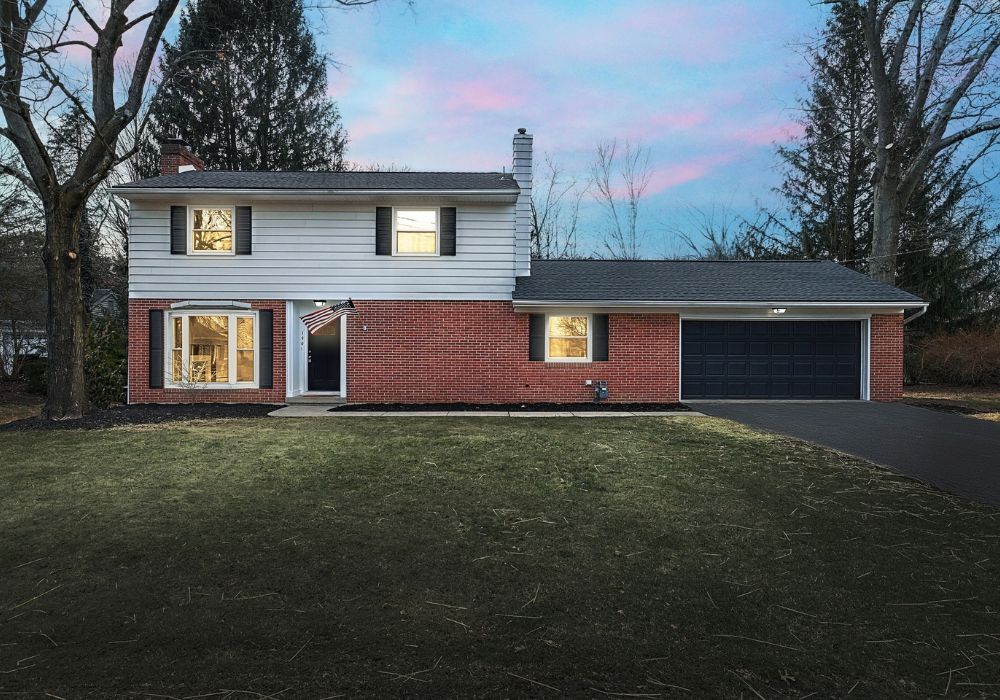
The property after renovations were completed
The purchase price was $155,000, plus $5,775 in closing costs, bringing our initial investment to $160,775.
We expected the project to take about four months. During that time, our holding costs totaled roughly $10,900, including utilities, cost of money, insurance, and property taxes.
The property also needed a significant amount of work. Our renovation costs came to $83,600.
That put our total investment in the property at $255,280.
Here’s a look at the major numbers: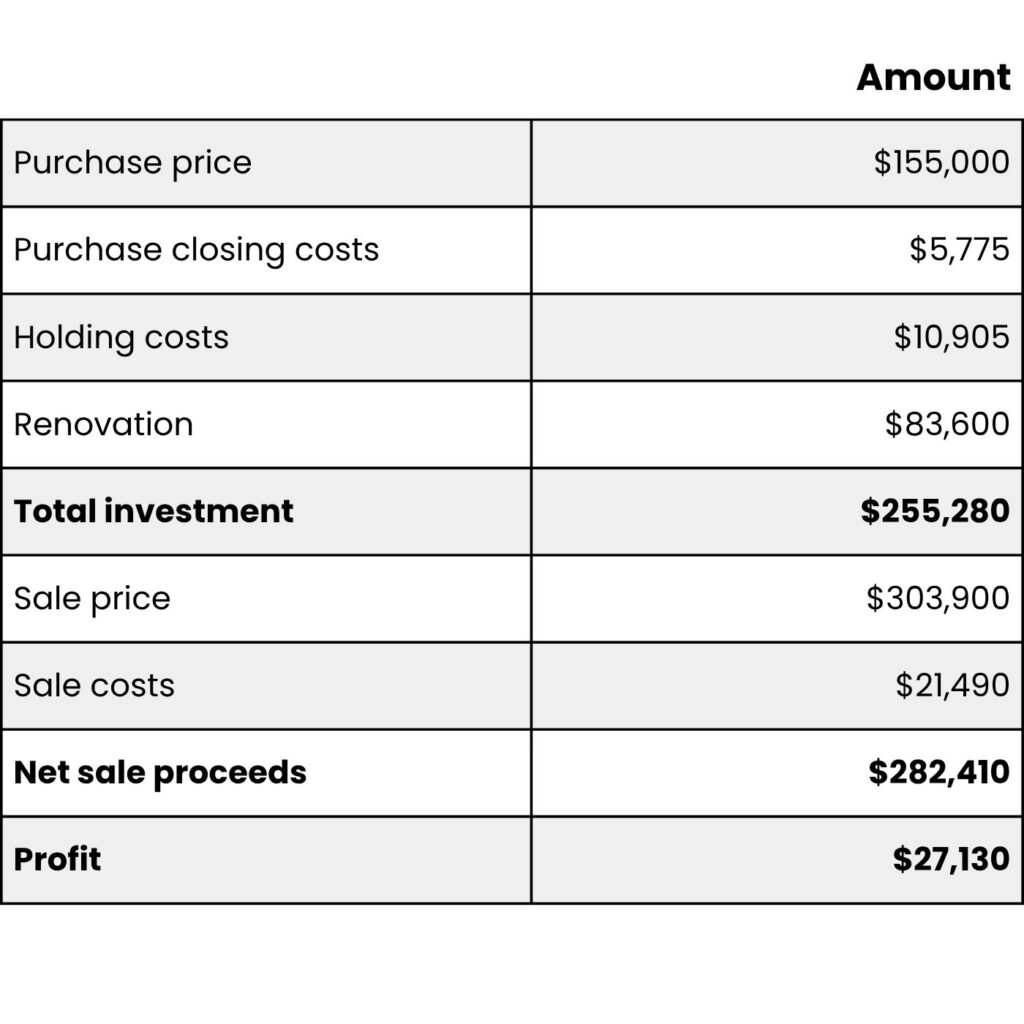 Once the renovations were complete, we listed the property for sale and agreed to a sale price of $303,900.
But the $303,900 sale price wasn’t the amount we put in our pocket. Just as there are costs associated with buying a property, there are costs associated with selling one. In this case, our sales costs totaled $21,490.
That left us with $282,410 in net sale proceeds.
Subtracting our $255,280 total investment left us with a $27,130 profit.
So, the flip worked.
But here’s where the exit strategy becomes important.
It Worked as a Flip. What About a Rental?
Before purchasing the property, we already knew it didn’t make sense as a rental. The numbers simply didn’t work.
Let’s use some rough numbers to illustrate why.
After the renovations, the property was worth $303,900. If we had financed 70% of that value with a 30-year mortgage at 7%, the loan amount would have been about $212,730.
That would put principal and interest at roughly $1,415 per month.
Add estimated property taxes and insurance, and the total PITI would be around $2,200 per month.
That’s simply higher than what the local market could support in rent.
And that’s before accounting for other costs that come with owning a rental property, such as maintenance, vacancy, and property management.
So even though this property worked as a flip, it wasn’t a property we wanted to hold as a long-term rental.
That’s an important distinction.
The Exit Strategy Should Come Before the Purchase
It would be easy to look at this property after the fact and say, “We bought it for $155,000, put some money into it, and sold it for $303,900. That sounds like a good deal.”
But that’s not really how we looked at it.
We weren’t simply asking whether the property was worth buying. We were asking whether the property made sense as a fix and flip.
The numbers told us that it did.
The same analysis told us that it didn’t make sense as a rental.
That’s why identifying your exit strategy before making an offer is so important. The strategy determines which numbers matter and how you should evaluate the property.
For a fix and flip, you’re primarily concerned with things like:
-
- What can I realistically sell the finished property for?
- How much will the renovation cost?
- How long will the project take?
- What will the property cost me while I’m holding it?
- What will it cost to sell the property?
- After accounting for all of those costs, is there enough room for the deal to make sense?
For a rental, the questions are different. While the property’s purchase price and value still matter, you’re more concerned with the property’s ability to generate enough income to cover its expenses.
The property hasn’t changed. The investment strategy has.
And that can completely change your analysis.
Don’t Buy First and Figure Out the Exit Strategy Later
One of the easiest mistakes to make in real estate investing is finding a property that looks attractive and then trying to figure out what to do with it.
Instead, start with the end in mind.
If you’re looking at a potential fix and flip, analyze it as a fix and flip. If you’re considering a long-term rental, analyze it as a rental. If you’re considering another exit strategy, run the numbers for that strategy.
Sometimes the numbers will tell you that the property works.
Sometimes they’ll tell you to change your strategy.
And sometimes they’ll tell you to walk away.
That’s the point of evaluating a deal before you buy it. A property doesn’t have to be a good deal for every strategy. It just needs to make sense for the strategy you’re actually planning to use.
Thanks for reading this week’s Experience, and best of luck in your real estate investing journey!
-BROCK