
What a Rental Turnover Actually Costs
One of the most common questions we hear—especially from newer real estate investors—is: How much did the renovation actually cost?
Not estimates. Not rules of thumb. Real numbers from real projects.
How much does it cost to replace flooring? Paint an apartment? Update a kitchen? These are the details that matter when underwriting deals and avoiding costly surprises.
That’s exactly why we created the video included in this post. It walks through a recent rental turnover and breaks down the numbers so you can see what actually went into the renovation.
The Reality Behind This Turnover
This wasn’t a standard between-tenants refresh. The previous tenant had lived in the apartment for about 20 years, and the prior owner never renovated it before that tenant moved in. Much of the apartment reflected decades of deferred updates.
Because of that, this turnover required more extensive work than usual. In addition to routine items like paint and flooring, we installed new kitchen cabinets and windows—upgrades not part of a typical turnover.
From start to finish, the renovation took just over a month.
The Actual Renovation Costs
Below is a breakdown of the real renovation costs from this turnover. Material and labor costs are separated so you can see where the money went and how larger projects add up.
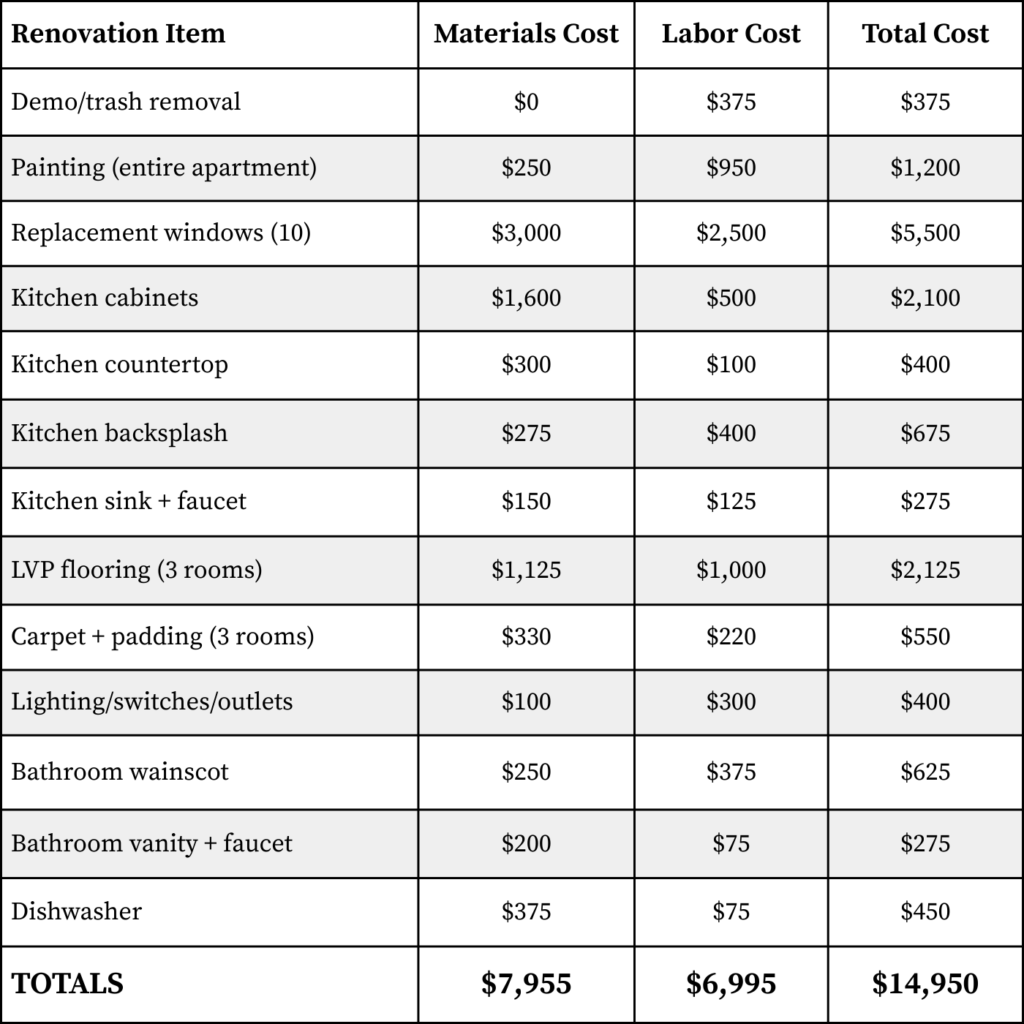 *Kitchen cabinets and windows are not part of a typical between-tenants renovation. *Prices of materials and labor will vary depending on your location.
The table above shows the full renovation cost breakdown by material and labor. The video below walks through these numbers in more detail and shows some before and after of the project.

Why Consistency Matters in Renovations
Across our portfolio, we stay consistent with renovation materials and finishes—using the same paint, flooring, and specifications whenever possible.
This saves money on materials and simplifies future repairs. When maintenance arises, we don’t have to match discontinued products or replace entire areas—we already have compatible materials on hand.
It’s not glamorous, but it’s one of the most effective ways to control long-term costs.
The Financial Outcome
After completing this turnover, we increased the apartment’s rent by 38%. That jump wasn’t from luxury finishes—it came from updating a dated unit and addressing decades of deferred maintenance.
Why We Share the Real Numbers
Too often, renovation discussions stay vague. Investors hear averages, but rarely see real projects’ actual costs.
Sharing these numbers helps set realistic expectations, improves underwriting, and allows better decisions before a deal is ever purchased. Understanding what renovations really cost is just as important as finding the right purchase price.
A Helpful Resource for Your Own Renovation Projects
If you want to plan your own renovations and build a realistic budget, we offer a free renovation budget calculator.
It’s designed to break down an entire renovation project by line item—just like the table above—so you can plan accurately and avoid surprises on your own projects.
Thanks for reading this week’s Real Estate Investing Experience. I hope it was valuable to you, and I wish you the best of luck in your investing journey!
-BROCK