
Would you spend $65,000 to replace something you were already getting for free?
Most people wouldn’t.
At first glance, it sounds wasteful. Why spend money on office space when you already have space available at no cost?
But that’s exactly what we chose to do—and it turned out to be one of the smarter financial decisions we’ve made.
The reason comes down to a real estate investing metric called Cash on Cash Return.
Most investors think metrics like Cash on Cash Return are only useful when analyzing new deals. But in reality, they can also help you make better decisions about:
-
- Existing properties
- Business operations
- Underused assets
- Opportunity cost
- Capital allocation
In our case, it helped us uncover that our “free” office space wasn’t free at all.
What Is Cash on Cash Return?
Cash on Cash Return (CoC) measures the annual pre-tax cash flow an investment produces relative to the cash you personally invested.
The formula is simple:
Annual Pre-Tax Cash Flow ÷ Total Cash Invested = Cash on Cash Return
It tells you how hard your actual dollars are working.
Unlike Return on Investment (ROI), which may include appreciation or long-term gains, Cash on Cash Return focuses on current income generated from invested cash. That makes it especially useful for investors focused on cash flow and efficiency.
Quick Example
If a property generates $20,000 per year in pre-tax cash flow, and you have $260,000 invested, your CoC is:
$20,000 ÷ $260,000 = 7.7%
That means your invested cash is producing a 7.7% annual return through cash flow alone.
Why “Free” Isn’t Always Free
Years ago, we needed office space for our business. Instead of leasing an office, we used a two-bedroom apartment we already owned.
On the surface, it seemed like a smart move.
-
- No monthly rent
- No separate office expense
- We already owned the property
It felt efficient.
But there was a problem.
That apartment could have been rented to a tenant and generating income every month.
So while we weren’t paying rent, we were sacrificing the cash flow the property could have produced.
That’s the hidden cost many investors overlook: opportunity cost.
The $65,000 Decision
Rather than continue using the apartment as office space, we decided to build a dedicated office for the business.

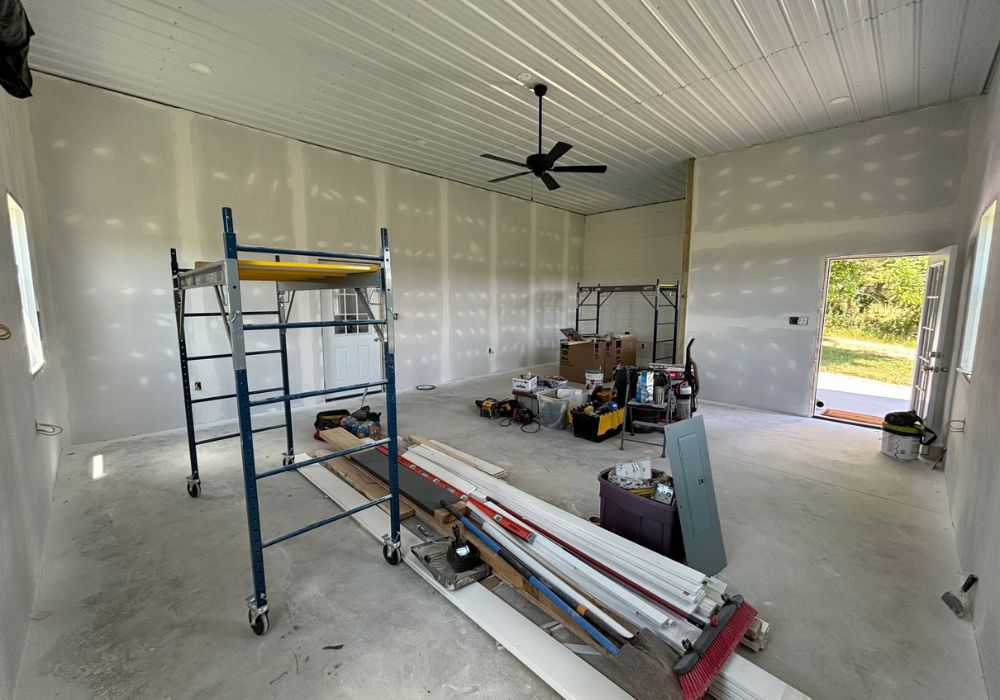
Cost: $65,000
To many people, that sounds irrational.
Why spend $65,000 when you already had “free” office space?
Because the apartment wasn’t free—it was underperforming.
Once we moved out of the apartment and rented it to a tenant, the numbers changed quickly.
-
- Monthly rent: $1,015
- Monthly net income: $850
- Annual net income: $10,200
Now let’s calculate the return on the $65,000 spent to build the office.
$10,200 ÷ $65,000 = 15.7% Cash on Cash Return
What the Numbers Revealed
In the old setup:
-
- We had office space
- The apartment produced no rental income
- Cash on Cash Return on that decision: effectively 0%
In the new setup:
-
- The business still had office space
- The apartment became income-producing
- The $65,000 investment generated a 15.7% annual return
- We added another functional asset to the property
So, what looked more expensive was actually the smarter investment.
The Bigger Lesson for Investors
This experience reinforced something many investors miss:
Investment metrics aren’t only for evaluating purchases.
They’re also useful for evaluating how you’re using what you already own.
That applies to:
Existing Properties
Could a property be reconfigured, repositioned, or rented differently to improve returns?
Business Operations
Are business decisions tying up valuable assets that could be deployed better elsewhere?
Underused Assets
Do you own something valuable that isn’t producing income?
Opportunity Cost
What are you giving up by keeping the status quo?
Capital Allocation
Where can your next dollar earn the highest return?
Why Cash on Cash Return Matters
Cash on Cash Return helps remove emotion from decisions.
Sometimes “saving money” isn’t actually saving money.
Sometimes the cheapest-looking option is the most expensive one.
And sometimes spending capital strategically creates far more value than holding onto an inefficient setup.
Final Thoughts
Most investors use metrics like Cash on Cash Return to analyze the next deal.
But some of the best opportunities aren’t new acquisitions—they’re hidden inside assets you already own.
Our “free” office space felt like a smart move until we ran the numbers.
Once we did, the better path became obvious.
Before chasing the next investment, ask yourself:
Are the assets I already own working as hard as they could be?
Thanks for reading this week’s Experience, and best of luck in your real estate investing journey!
-BROCK