
One of the most important decisions you’ll make as a real estate investor isn’t just what property to buy—it’s how you plan to exit the deal.
Should you flip it for a quick profit? Turn it into a short-term rental? Or hold it as a long-term rental that generates steady monthly cash flow?
The truth is, there’s no single “best” exit strategy. The right choice depends on the property’s numbers, the local market, and your overall investing goals.
To illustrate that point, let’s look at a real investment property from our portfolio.
The Deal
This property was purchased with the intention of becoming a long-term rental.
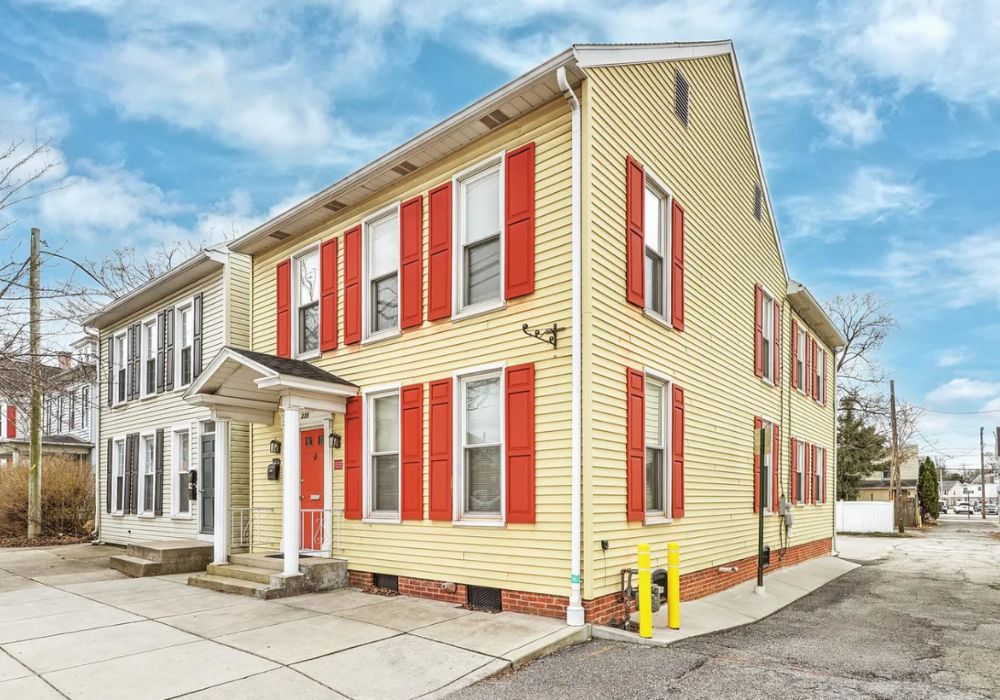
The purchase price was $102,000, but our actual acquisition cost came to $111,500 after accounting for $4,500 in closing costs and a $5,000 wholesaler assignment fee.
The property required a moderate renovation that cost $18,000. During the five-month renovation and lease-up period, we also incurred approximately $3,300 in holding costs, including utilities and financing expenses.
Here’s how the numbers broke down:
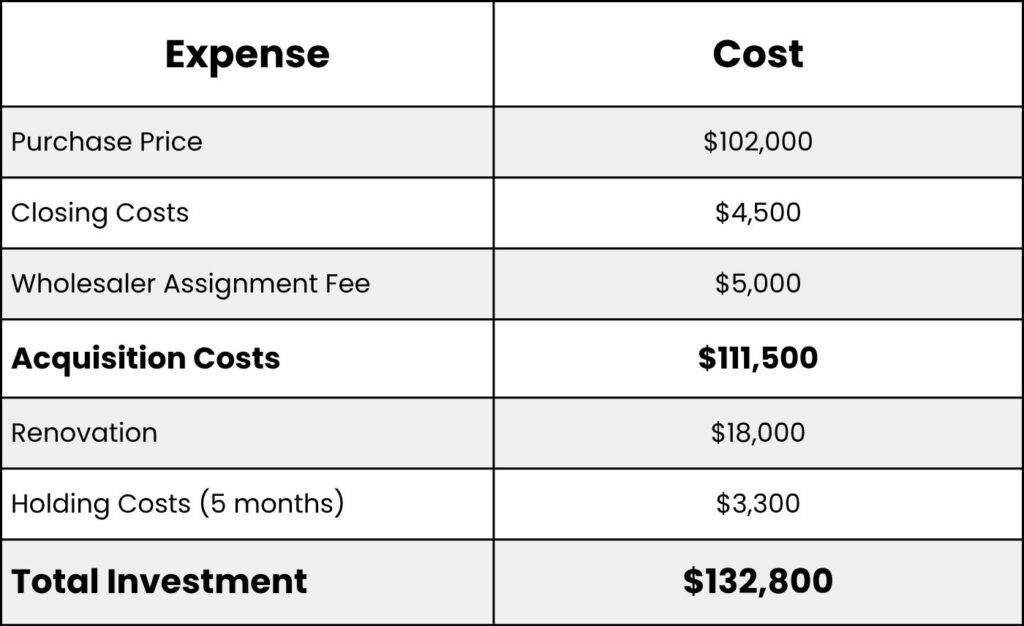
By the time the property was renovated, leased, and ready for refinance, we had invested $132,800 total into the project.
Refinancing Through the BRRRR Strategy
Because this property was part of a BRRRR strategy (Buy, Rehab, Rent, Refinance, Repeat), the next step was refinancing it after the renovation was complete and tenants were in place.
The renovated property appraised for $196,000.
We refinanced into a new loan at 70% loan-to-value (LTV), resulting in a loan amount of $137,200.
The refinance itself cost another $3,000, bringing our total investment to $135,800.
Since the refinance returned $137,200, we recovered all of our invested capital—and even pulled out approximately $1,400 beyond what we had invested.
While $1,400 isn’t life-changing on its own, the real benefit was being able to recycle nearly all of our capital into another investment while continuing to own this property.
The Cash Flow
Recovering your capital is only part of the equation.
The property also needed to produce consistent monthly cash flow.
Once leased, the property rented for $1,565 per month. The lease required tenants to pay all utilities, simplifying ongoing operating expenses.
The monthly principal, interest, taxes, and insurance (PITI) payment totaled $1,256, resulting in approximately $309 per month in cash flow.
Not every deal will generate these exact numbers, but this property met our investing criteria by providing both capital recovery through the refinance and steady monthly income.
Why We Chose a Long-Term Rental
Could we have flipped this property instead?
Probably.
But just because a property can be flipped doesn’t necessarily mean it should be.
In this case, several factors made a long-term rental the stronger choice.
First, the projected cash flow was attractive enough to justify holding the property instead of selling it.
Second, the property was located in our local market. That meant we could manage the property ourselves, and we already had trusted contractors available for maintenance and future repairs.
Finally, the local market wasn’t especially well suited for a short-term rental. Based on our analysis, it was unlikely that converting the property into a vacation rental would produce significantly better returns than a traditional lease.
When you combine strong monthly cash flow, a successful refinance, and a market that supports long-term rentals, holding the property became the obvious choice.
The Bigger Lesson
Every investment property should be evaluated through multiple potential exit strategies before you make an offer.
Sometimes the numbers point toward a flip. Other times a short-term rental produces the strongest returns. And in many cases, a long-term rental provides the best balance of cash flow, equity growth, and long-term wealth building.
The important thing isn’t choosing the “right” exit strategy for everyone else—it’s choosing the one that makes financial sense for the property you’re evaluating and aligns with your own investing goals.
Before you buy any investment property, run the numbers for every realistic exit strategy. The more options you understand, the better positioned you’ll be to make profitable investment decisions.
Thanks for reading this week’s Experience, and best of luck in your real estate investing journey!
-BROCK
P.S. This case study is based on a real investment property and comes directly from our course, How to Evaluate and Offer on Real Estate Deals. In the course, we walk through additional real-world examples and show you how to analyze potential deals, compare exit strategies, and determine whether a property makes financial sense before making an offer.